Author of this article: Andreas Soller
Product growth
In this article we focus why growth models became more popular than distribution funnels and what challenges growth loops face with changed user behavior through AI.
8 min read (1853 words)
Product + Growth
Building a digital product that works is only one side of the coin. The other half is distribution. Without a go-to-market strategy (GTM) the best product cannot be scaled.
Product side
Building something functional, valuable, and user-friendly. This is the product or creation side.
Distribution side
Getting the product into the hands of the right people. This is the distribution or growth side.
From distribution funnels to loops
For any product, you must be able to answer the following questions in a predictable, sustainable and differentiable way:
- How do you acquire?
- How do you activate?
- How do you retain?
- How do you monetize?
AAARRR (Pirate metrics)
To do this in a structured way, funnel frameworks were introduced. One of the most popular frameworks is the AAARRR (Pirate Metric) framework that was introduced by Dave McClure in 2007. Each phase involves its own set of activities and metrics and there is no rigid sequence.
Pirate Metrics
Configure columns
No results found |
This structured approach provides a lot of advantage, as it makes it easy to identify at what steps user drop off, spot room for improvements and detect conversion bottlenecks. As each step has its own metrics, performance can easily be monitored.
Nevertheless, with digital products the funnel framework also faced some limitations:
- They treat distribution as something external to the product. This can lead to silos between product and distribution (marketing)
- Funnels require external budgets to fund for example social media marketing.
- They don’t capture how user behavior itself drives growth
- The linear structure of funnels indicate a one way flow and all measurements have only one target
The question arose, what happens if product and distribution are not separate activities. What if growth could be driven mainly by the product and therefore, user behavior, instead of externalized distribution activities.
This does not imply that funnels are outdated. There are still many use cases where funnel analysis is the right tool to use. But those questions opened a different perspective at digital products and led to growth funnels and also hybrid approaches where funnels and loops are used next to each other.
Product-led growth loops
Growth Loop
A loop is a circle where one action feeds into the next, creating continuity.
A growth loop is a self-reinforcing cycle where each user action creates a potential to create more of a desired outcome that feeds back into the cycle.
The idea is to think how your product meets acquisition, activation, retention and having monetization at its core as this is, what keeps your business going. Your product itself is the distribution channel or is the essential part of growth.
- This leads to self-reinforcing cycles where each user interaction can generate more users, more content or more transactions.
- Lower acquisition costs as growth is embedded in the product experience
- *Compounding effects as loops multiply over time, creating momentum
Types of Growth Loops
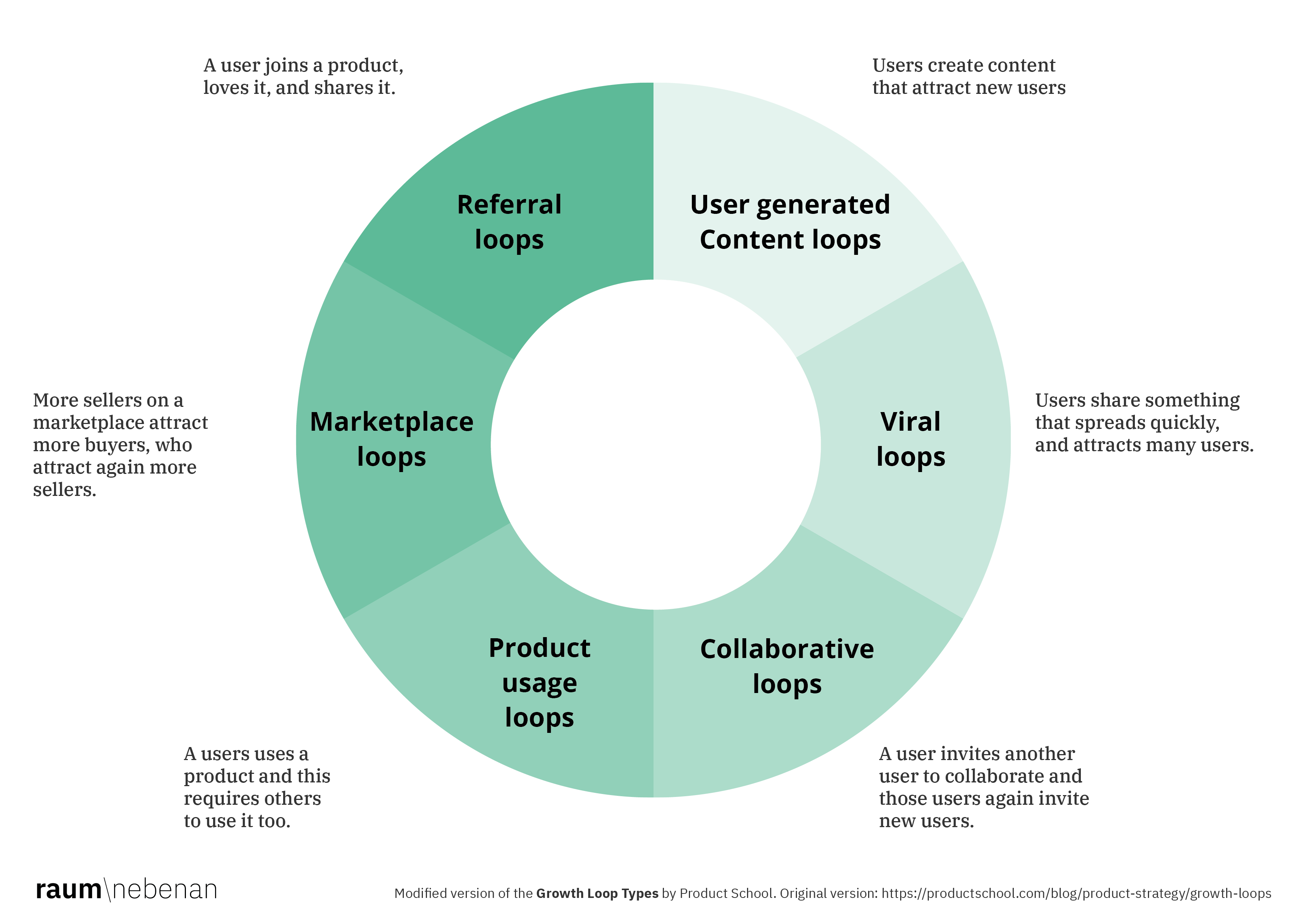
Types of Growth Loops
Configure columns
No results found |
User-generated content (UGC) loops
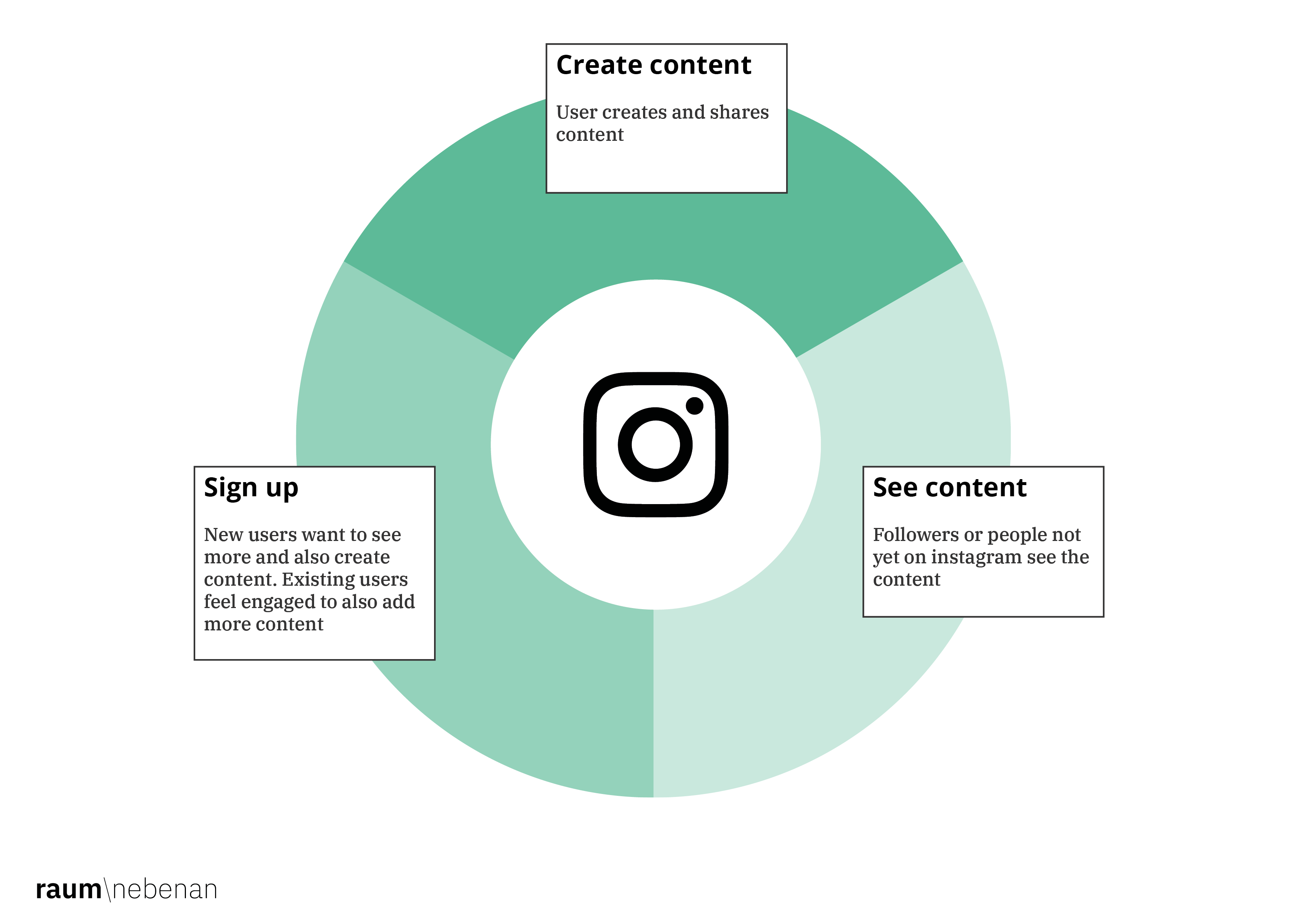
User-generated content loop
The creative content created by users becomes the fuel that attracts more users. Each new user adds more content, which in turn draws in even more people, creating a cycle that sustains itself without reliance on external marketing and distribution activities.
- Creation: Users produce posts, videos, photos, reviews, etc.
- Distribution: The platform makes this content visible through feeds, algorithms, or social sharing. Creative content accumulates over time and builds long-term value
- Attraction: Non-users or casual viewers encounter the content and join the platform to also create creative content
- Repetition: New users feed the cycle again
Metric examples
Configure columns
No results found |
Viral loops
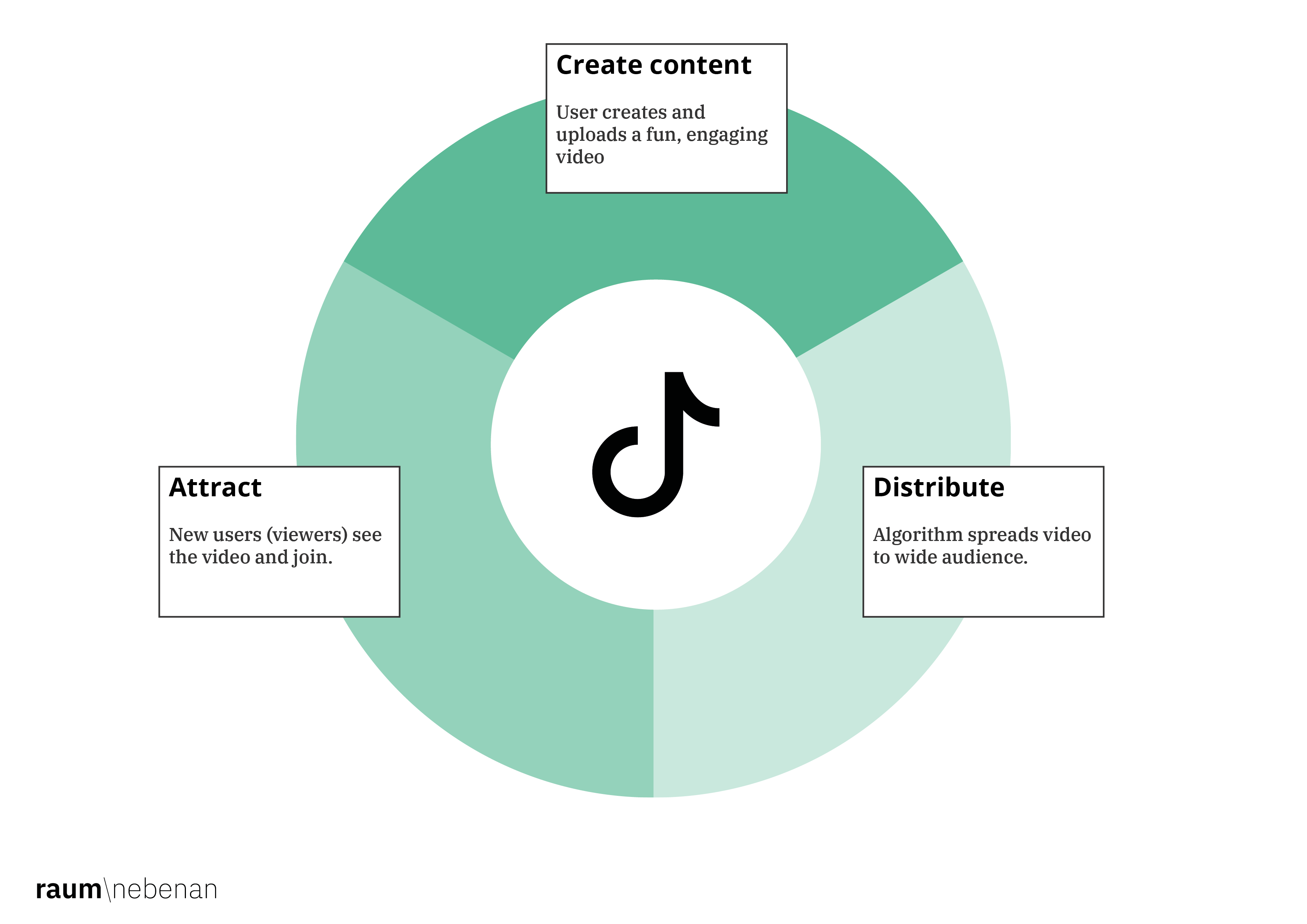
Viral loops
Users share content that is spread to a wider audience, usually supported by algorithms. This attracts more users leading to a self-reinforcing adoption cycle. Viral loops thrive on social sharing and visibility.
- Create: A user generates something engaging such as a video, meme or message
- Distribute: The content is distributed widely and speedy through social platforms, messaging apps or built-in sharing features
- Attract: New viewers encounter the content, become curious and sign up to view more content. The content is usually short lived. Attraction is achieved via a stream of constantly newly hyped and generated content.
- Repeat: These new users create and share their own content
Metric examples
Configure columns
No results found |
Collaborative loops
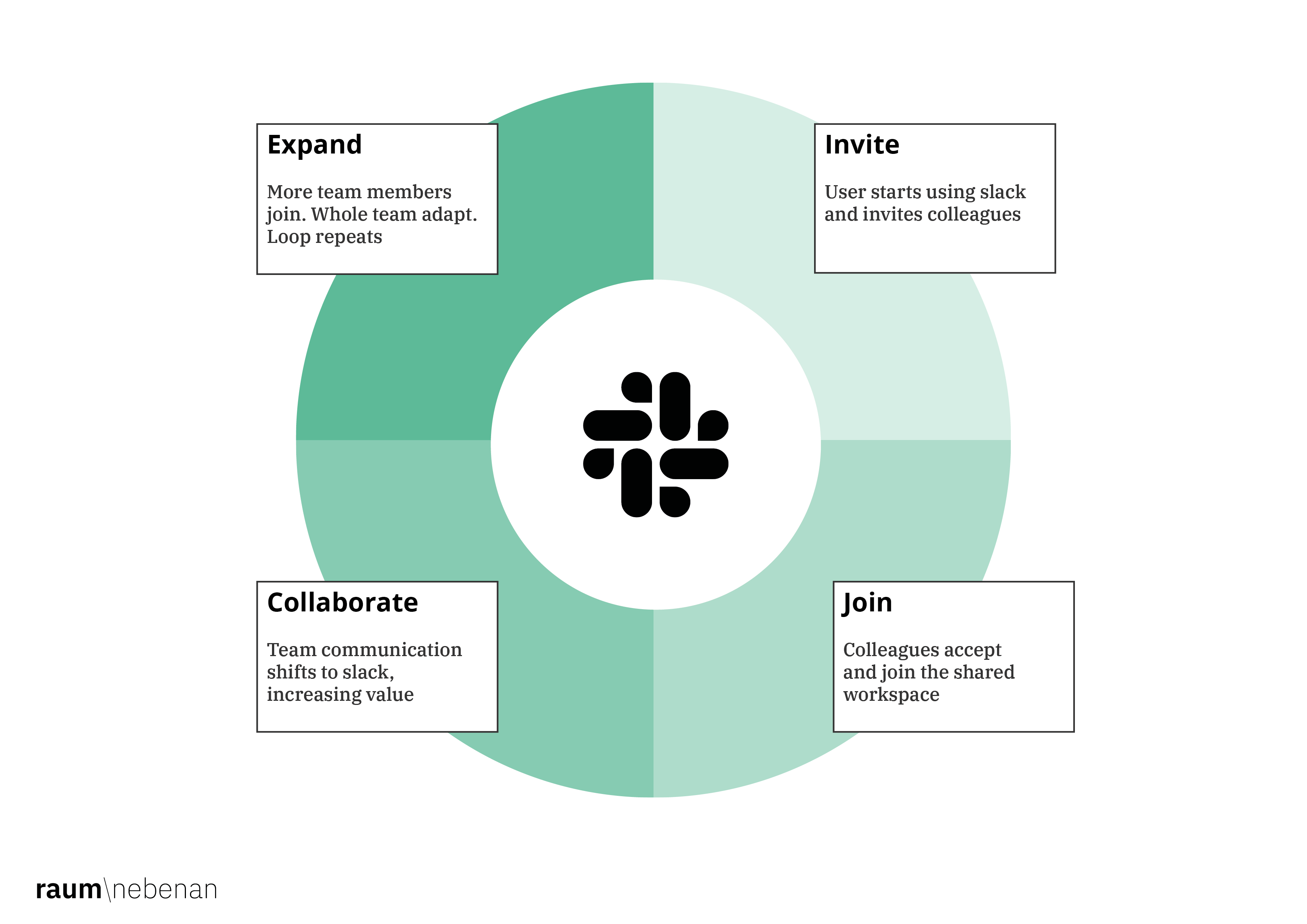
Collaborative loops
This loop relies on teamwork and shared participation. Collaboration loops expand because one person’s use of the product requires and encourages others to join in to unlock its full value.
- Invite: A user sets up a workspace, project or board in a collaborative tool and starts inviting colleagues
- Join: Colleagues, classmates, or friends join to work together
- Collaborate: The group works together inside the product (brainstorming, planning, editing, chatting, etc.)
- Repeat: Each new participant may start their own workspace and invite additional teammates
Metric examples
Configure columns
No results found |
Product usage loops

Product usage loops
Using the product itself naturally brings in new users. Each action by an existing user requires or encourages participation from others, creating a self-reinforcing cycle. This reduces acquisition costs and multiplies usage.
- Initiation: A user begins using the product for its core purpose
- Involvement: The user invites other people to participate
- Exposure: The invited participants experience the product firsthand, often without prior sign-up
- Adoption: Some exposed participants recognize the product’s value and sign up
- Repetition: New users initiate their own product
Metric examples
Configure columns
No results found |
Marketplace loops
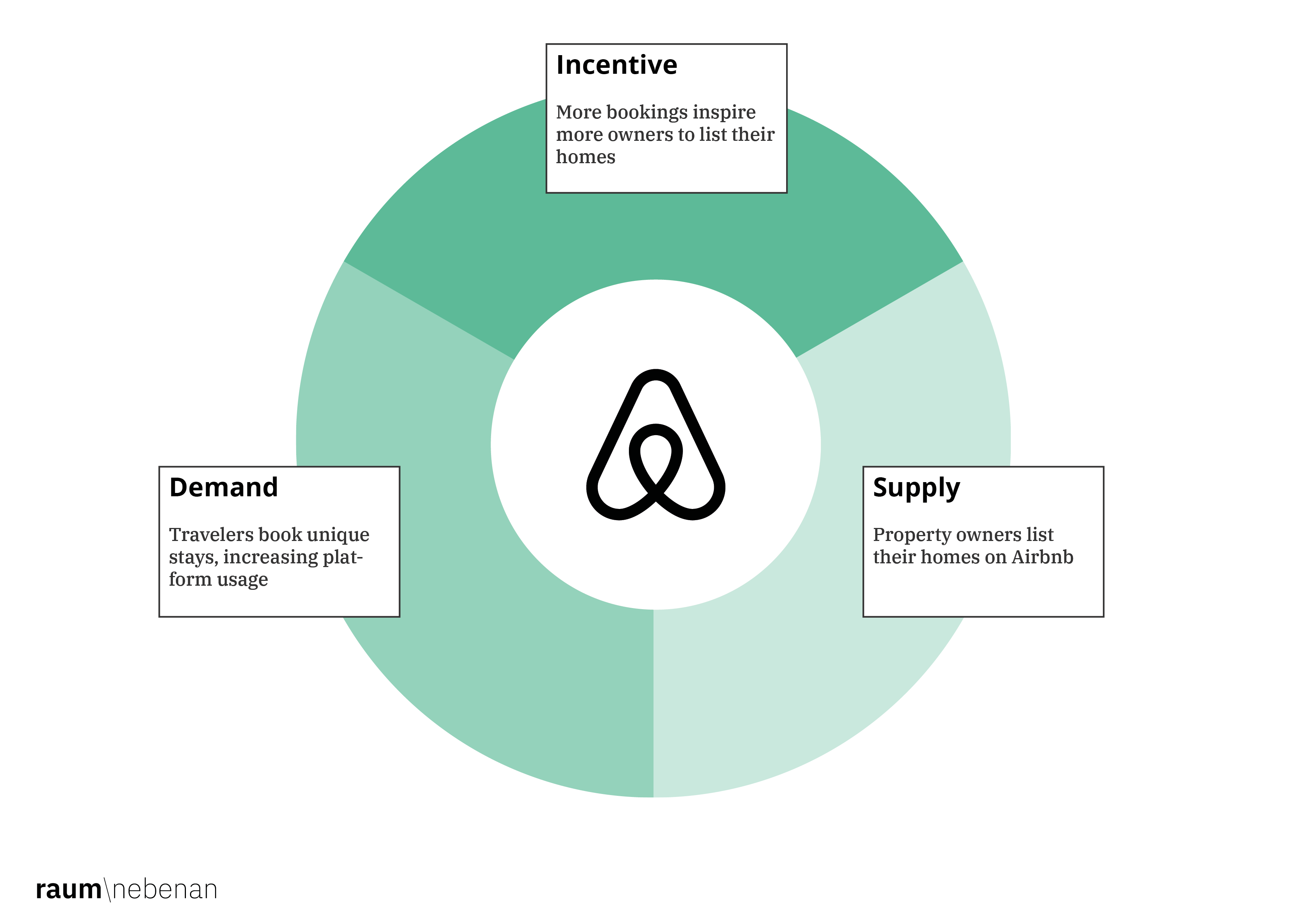
Marketplace loops
A marketplace loop is a self-reinforcing cycle where the presence of more sellers attract more buyers, and more buyers in turn attract more sellers, creating continuous growth and compounding network effects.
- Incentive: The platform motivates sellers to join by offering rewards, visibility, or revenue opportunities
- Supply: Sellers list products or services, expanding the marketplace’s offerings
- Demand: Buyers are drawn to the marketplace because of the growing supply.
- Repetition: Successful transactions encourage more sellers to join and more buyers to return
Metric examples
Configure columns
No results found |
Referral loops
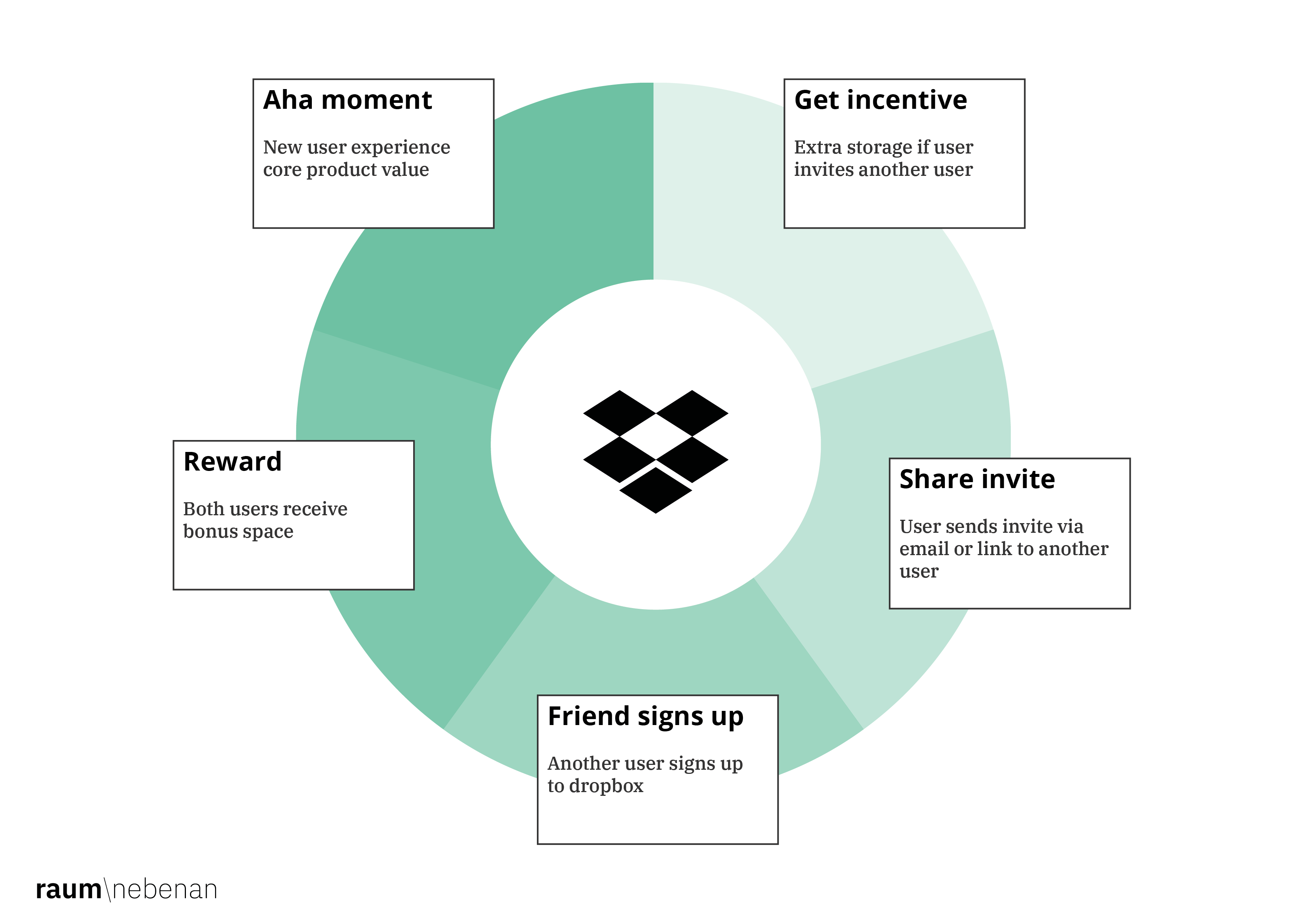
Referral loops
A referral loop is a growth mechanism where existing users invite new users, often incentivized by rewards. Each new user can then refer others, creating a self-reinforcing cycle.
- Initiation: A user experiences the product and finds it valuable
- Incentive: The platform offers a motivation to invite others
- Invitation: The user shares referral links, codes, or invites with friends
- Repetition: The invited user joins the product and experiences the core product value
Metric examples
Configure columns
No results found |
New challenges in the AI era
Signal vs. noise
With the advance of AI more and more synthetic data is generated at scale. AI does not just consume but also produce data at scale. This erodes the moat of companies that rely on user data as you make more and more decisions based on artificial behavior than real user behavior. It also becomes unclear where the data originates.
Growth loops must learn how to exclude synthetic content. They can only grow with authentic signals and risk becoming self-reinforcing cycles of noise.
Ask instead of search
With AI consumer habits are changing and therefore, transforming distribution channels. People are not using Google to search but rather use conversational AI agents to ask.
Distribution via search engine optimization / marketing (SEO/SEM) and also social media marketing experiences a radical shift.
Vibe coding
Vibe coding
Vibe coding is a new approach to software development where you describe what you want in natural language, and an AI generates the code for you.
With the advance of vibe coding through AI it has become very easy for everyone to create your own software. Simple functionalities that are easily replicable, can be re-created effortlessly by everyone and even big companies can be challenged. Additionally, the cost and structural complexity of creating software through vibe coding is going down.
Growth loops must rely on experience, trust, and ecosystem, not just functionality. As AI accelerates cloning of features, ecosystems can help. Network effects include growth loops by many partners, trust by community validation, the product is discoverable in multiple contexts and ecosystem positioning cannot be copied.
Shipping velocity
AI speeds up iteration cycles. What took weeks or months can now be done in hours or days. Therefore, even small teams or individuals can become creators that can replicate features easily using vibe coding or AI-assisted development.
Growth loops are faced with faster cycles. Products that can’t adapt can easily fall behind and can be hijacked by competition. Also, users expect improvements faster.
Brand-product fusion
As users are not searching via Google but asking AI agents, those assistants don’t show ads, campaigns or your brand context. The assistant just shows the information unrelated to your brand. AI strips away traditional brand channels.
As AI reshapes distribution, the product experience itself must embody the brand — otherwise loops lose their compounding power. Growth loops must include the emotional journey, such as making the people behind the product visible (example: founder social) or involve involver / creator marketing.
References and further reading
- sifted.eu (2025): DocuSign threatens legal action against copycat app build with Lovable, https://sifted.eu/articles/docusign-threatens-legal-action-against-copycat-app-built-with-lovable
- Semrush (2025): Semrush AI Overviews Study: What 2025 SEO Data Tells Us About Google’s Search Shift, Website: https://www.semrush.com/blog/semrush-ai-overviews-study/
- statistica.com (2025): AI-generated online content (AIGC) – statistics and facts, Website: https://www.statista.com/topics/12387/ai-generated-online-content-aigc/#topicOverview
- Verna, Elena (2025a): Why growth playbooks are crumbling – and what’s next?, Speech at ProductCon, San Francisco 2025, YouTube: https://www.youtube.com/watch?v=Vc6ij1ilhwc
- Verna, Elena (2025b): Interview with Product School, YouTube: [* Verna, Elena (2025a): Why growth playbooks are crumbling – and what’s next?, Speech at ProductCon, San Francisco 2025, YouTube: https://www.youtube.com/watch?v=8wLXHrZVOys
- Villaumbrosia, Carlos (2024): How to Use Growth Loops for Product Success, Product School, Web article: https://productschool.com/blog/product-strategy/growth-loops
How did you rate this article?
Thank you for your feedback.